process
We are experiencing a shift in domestic behavior: meals are moving from the formal dining table to more casual, comfortable, convenient settings. 87% of my target demographic now eat in “unconventional environments (sofas, desks, beds), yet the tools they use are dated, linking back to Victorian table etiquette. This project investigates the “Ergonomic Gap” between the defeciencies of standard stamped cutlery and the reality of modern, casual dining.
-
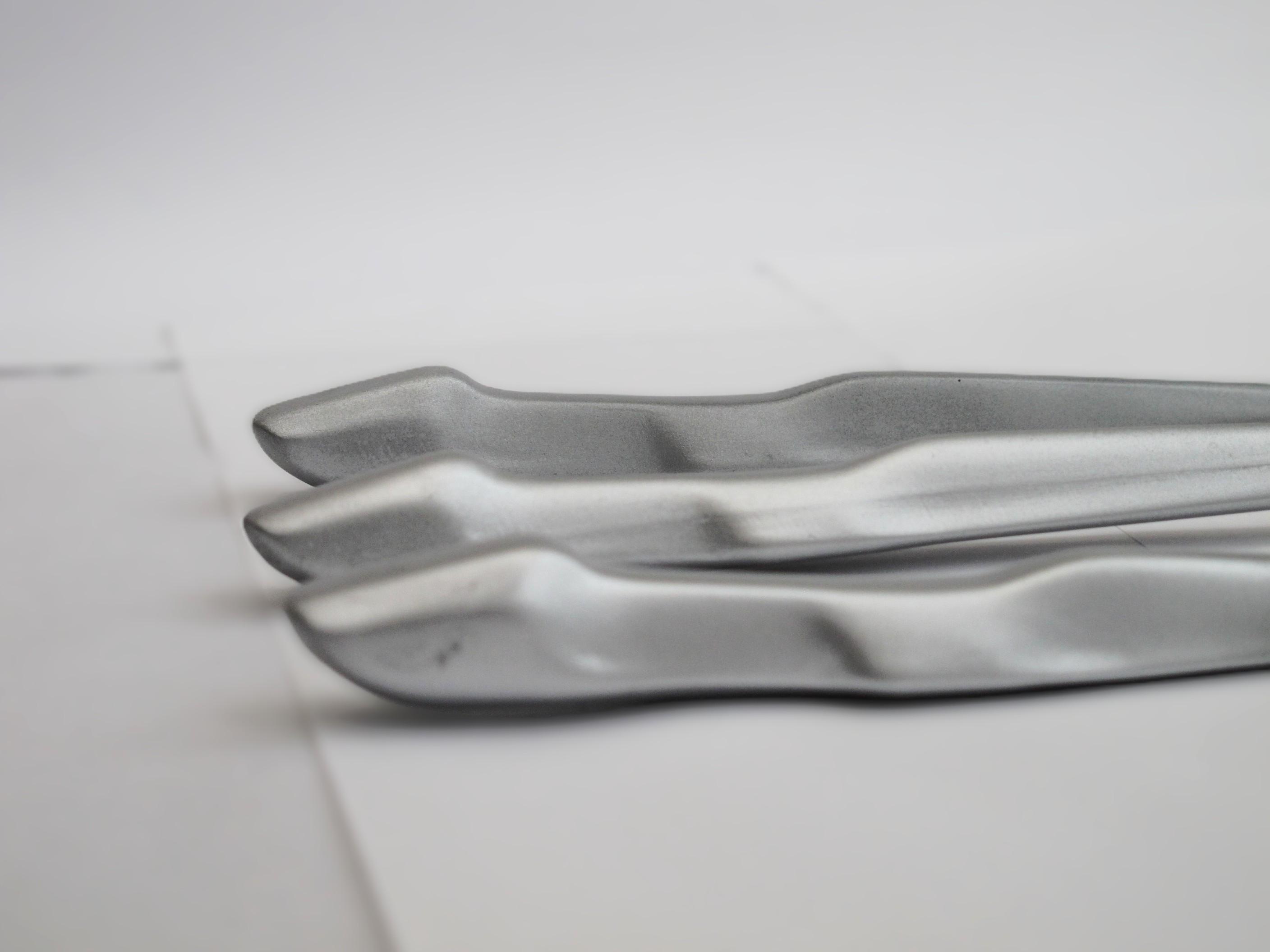
handle profiles, side by side 01
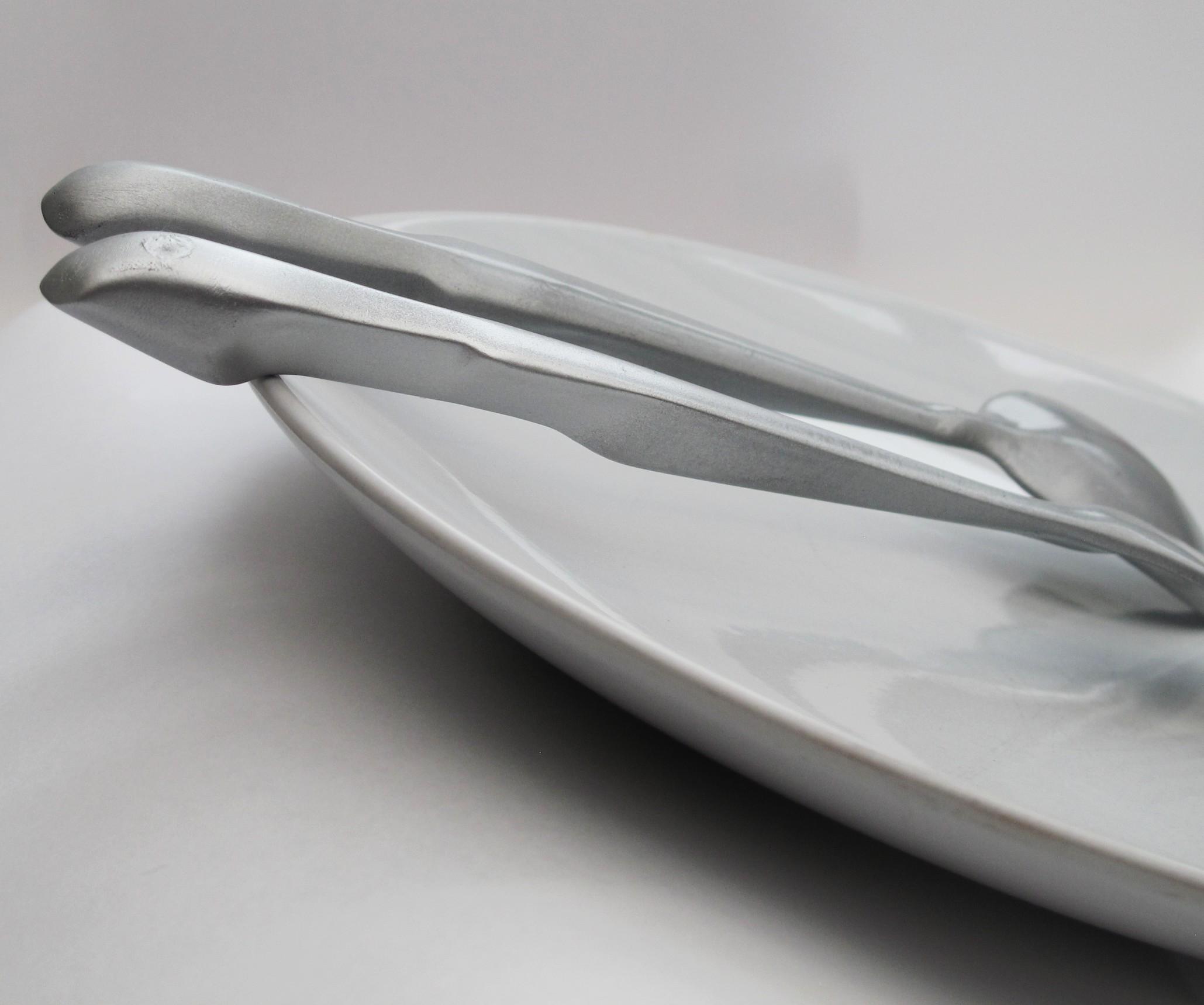
Round handles give no sign of which way up they sit, and flat stamped steel has a thin spine that cuts into the finger. I tried a triangular, D-shaped section with a flat top, so the shape itself says how to hold it, and set the neck 15 degrees off-axis to follow the natural grip angle.
-
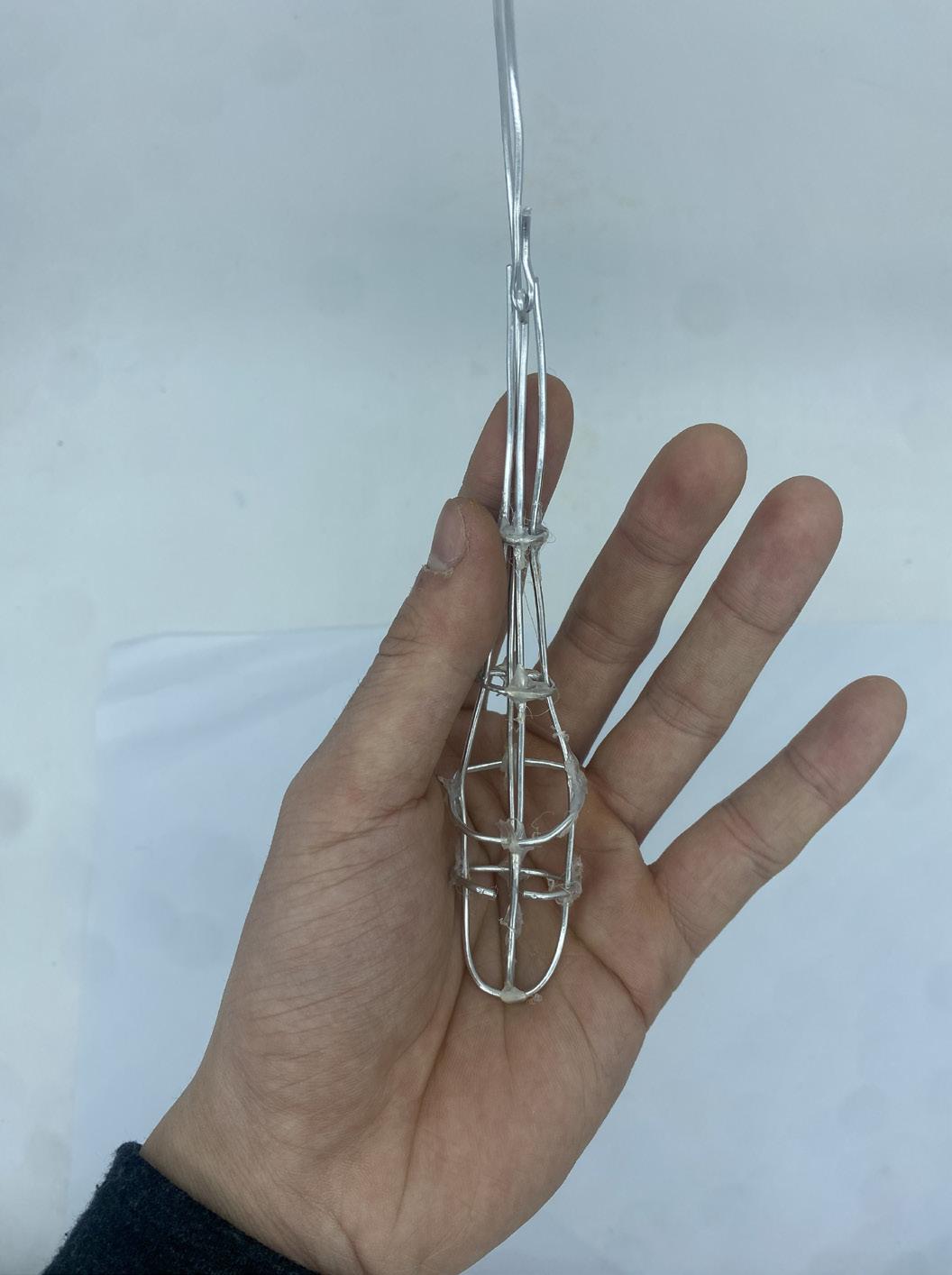
the handle volume sculpted in wire, in my own hand 02
Sculpting in wire let me build the handle's volume around my own hand. Carving a spoon and a knife earlier had shown that a handle that fills the palm spreads pressure far better than flat steel.
-
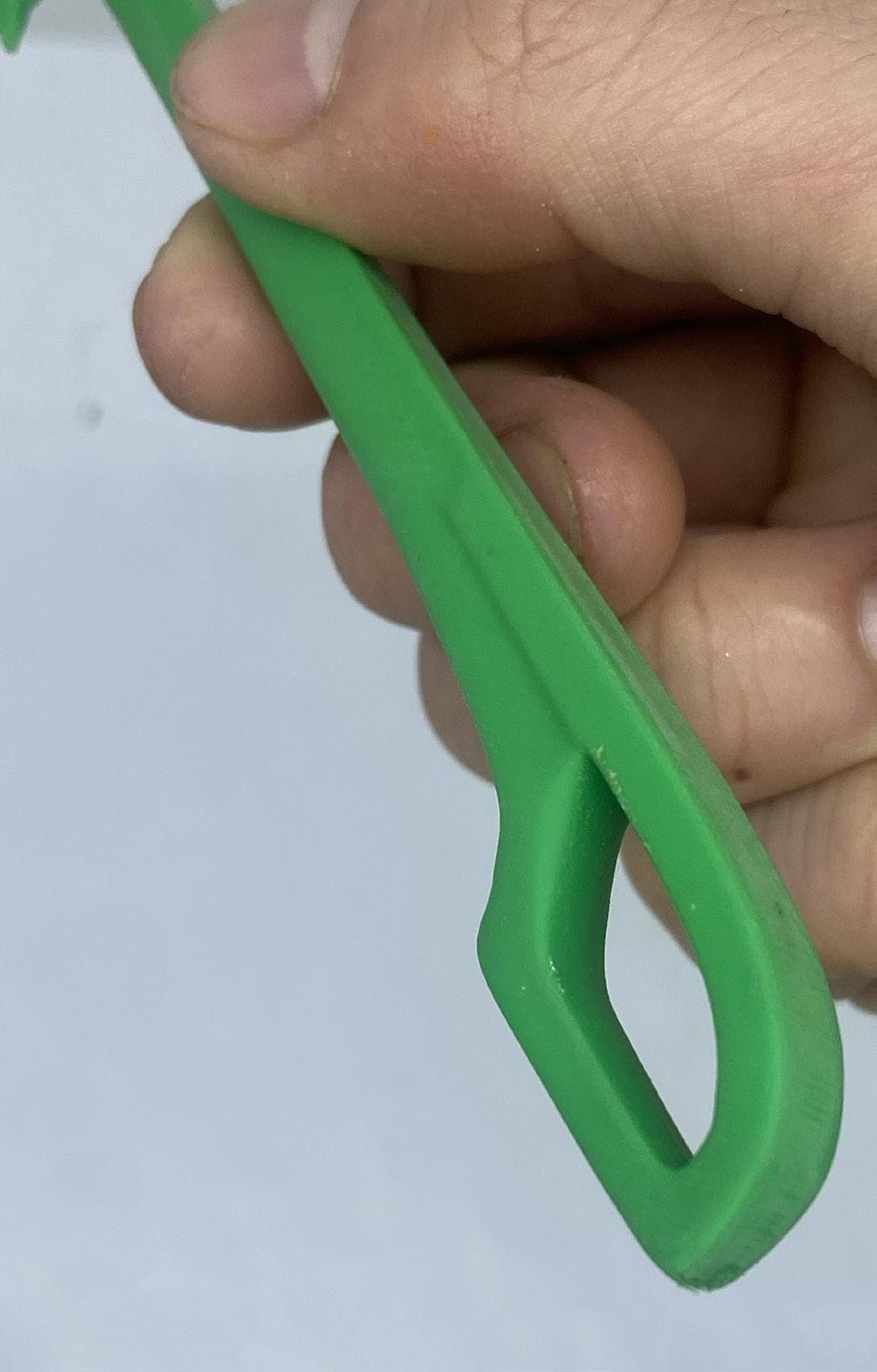
a printed handle iteration, held in the hand 03
I printed the handle in rounds and held each one against the grips I had observed. A fully round handle still gave no sign of orientation, so the final form is rounded for comfort and also asymmetric and flat-topped.
-
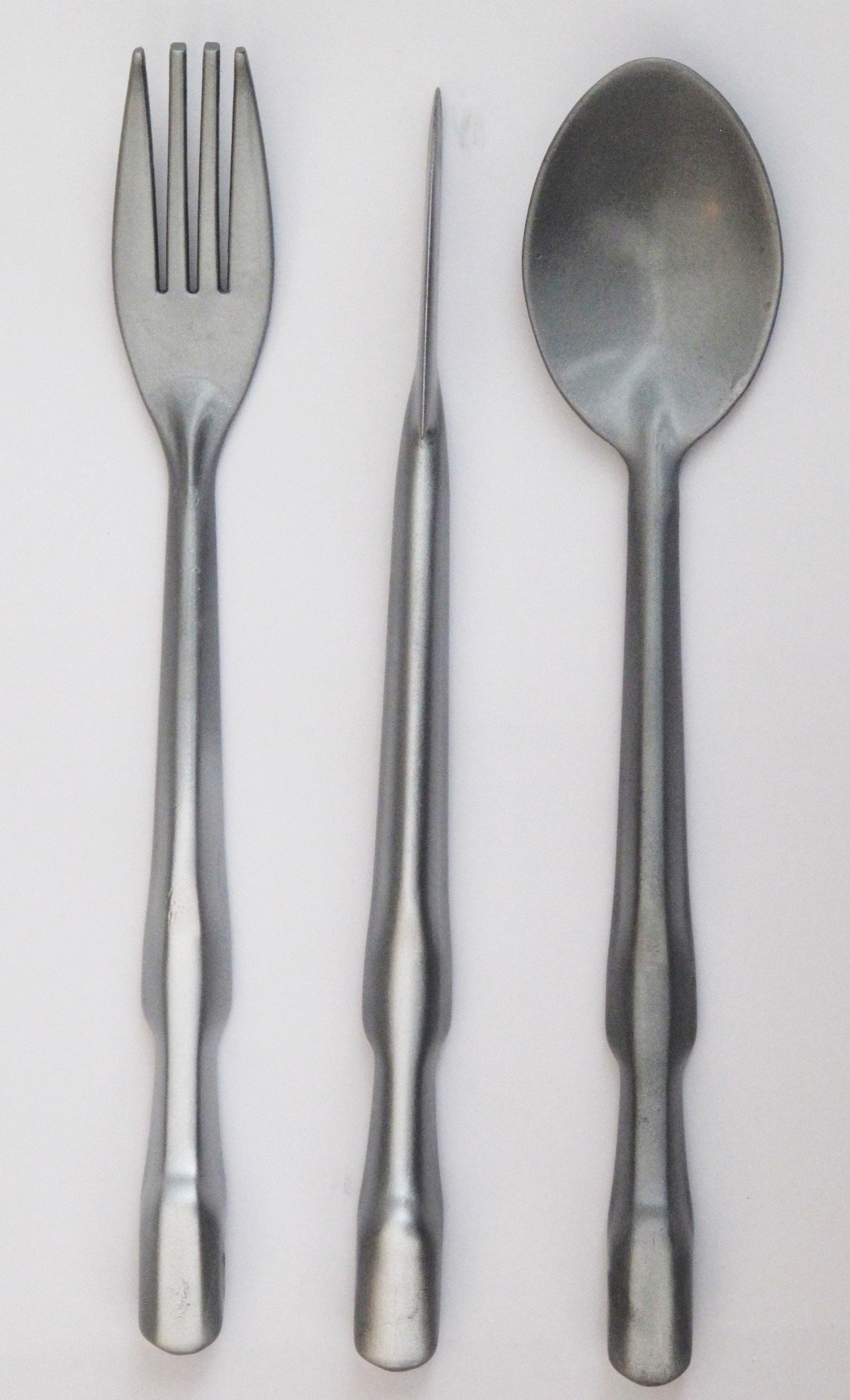
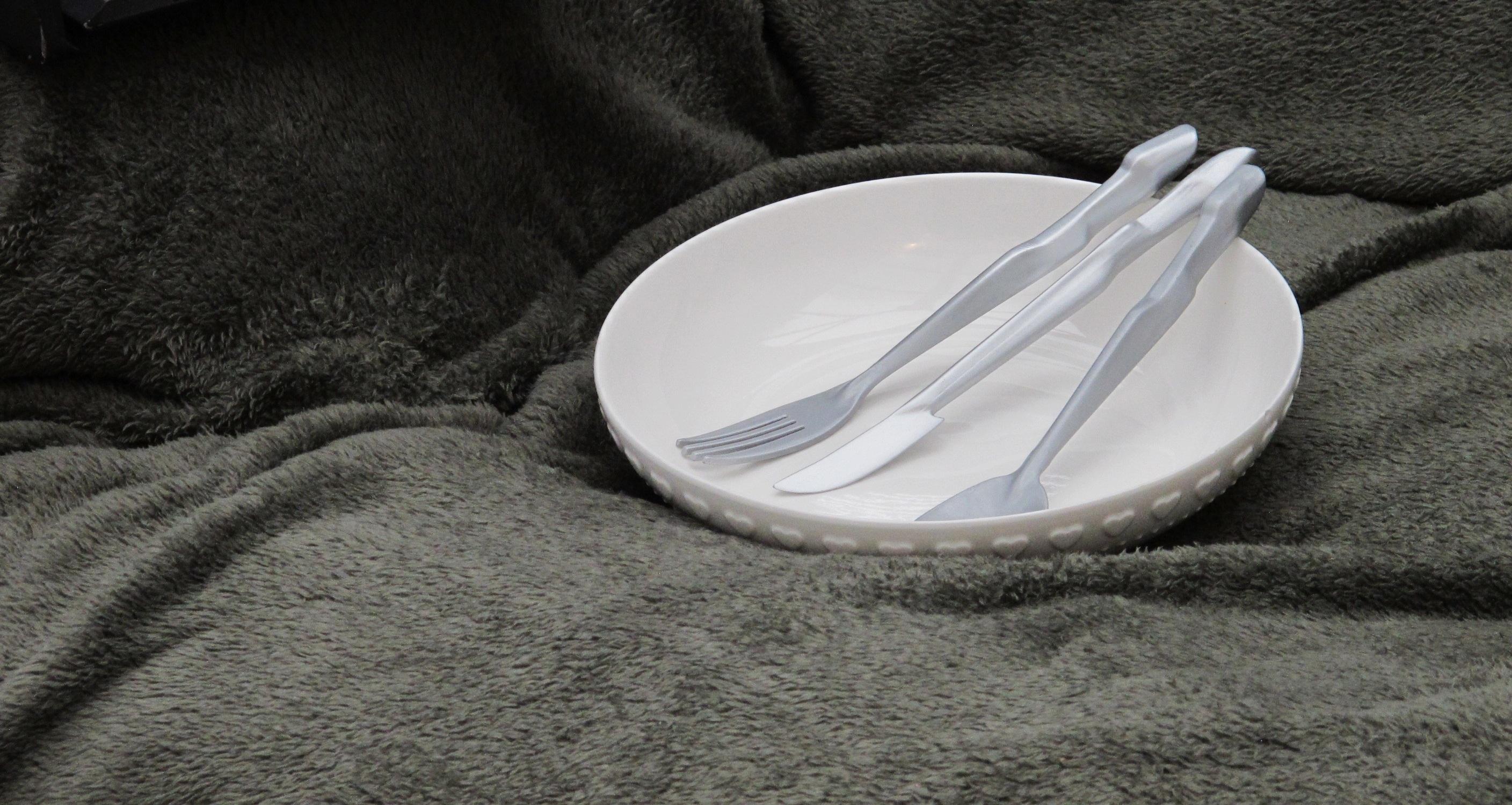
the finished set 04
The same handle runs across fork, knife and spoon. It swells to fill the palm, narrows at the neck and ends in a flat top that shows which way up it sits.
the problem
We are experiencing a shift in domestic behaviour: meals are moving from the formal dining table to more casual, comfortable, convenient settings. 87% of my target demographic now eat in “unconventional environments” (sofas, desks, beds), yet the tools they use are dated, linking back to Victorian table etiquette.
Standard cutlery assumes a hard, flat surface at table height, with room to extend the arm. On a sofa there is no such room: the plate sits on the knees or a soft arm, and a fork put down slides off onto the floor. This project investigates the “ergonomic gap” between the deficiencies of standard stamped cutlery and the reality of modern, casual dining.
who it is for
My surveys fed four persona archetypes, from a student who eats dinner on the sofa to a gym-goer and a teacher. Taylor stands for the extreme users, and Jamie’s “blind eating” sets the cognitive constraints, so the cutlery works beyond the average situation.
the handle
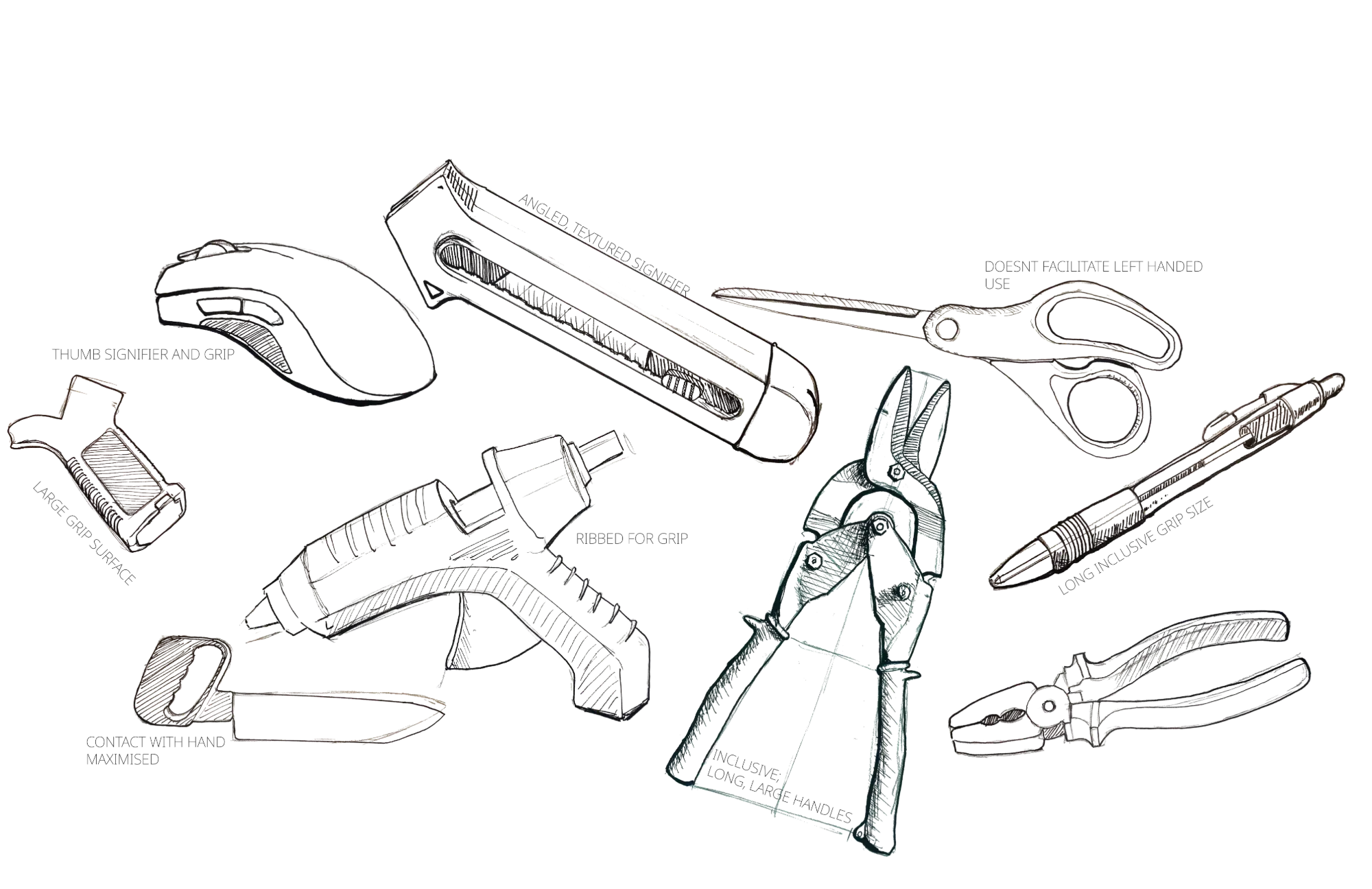
Dining is not one grip but a flow of them, and flat stamped steel is uncomfortable in the high-force ones. I wanted the comfort of orthopaedic cutlery without its clinical look. The handle fills the palm, uses landing pads for the finger to lower the pressure on it, and carries its own signifier for which way up it goes.